Comprehensive Overview of Automotive EMC Standards
EMI shielding for automotive electronics must meet multiple international and regional standards, which are far more stringent than consumer electronics:
| Standard | Scope | Key Requirements |
|---|---|---|
| CISPR 25 | Vehicle In-Cabin Electromagnetic Disturbance | 150 kHz – 108 MHz, strict device EMI limits |
| ISO 11452 | Vehicle-Mounted Equipment Immunity | RF, ESD, EMD, Transient anti-interference capability |
| ISO 7637 | Power Supply Transient Disturbance | Automotive circuit transient surge protection |
| IEC 61000-4-3 | RF Immunity | 0.15 – 1000 MHz, 20V/m to 200V/m |
In-Depth Analysis of CISPR 25 Standard
CISPR 25 is the core EMI standard for automotive electronics, with the latest version being CISPR 25:2022. Core requirements include:
Electromagnetic Disturbance Limits (CISPR 25 Class 3 – Passenger Vehicles)
- Broadband Radiation: 150 kHz – 30 MHz, 30 µV/m~80 µV/m
- Narrowband Radiation: 30 – 108 MHz, 20 µV/m~150 µV/m
- Conducted Disturbance: 0.15 – 30 MHz, 100 µA~7500 µA
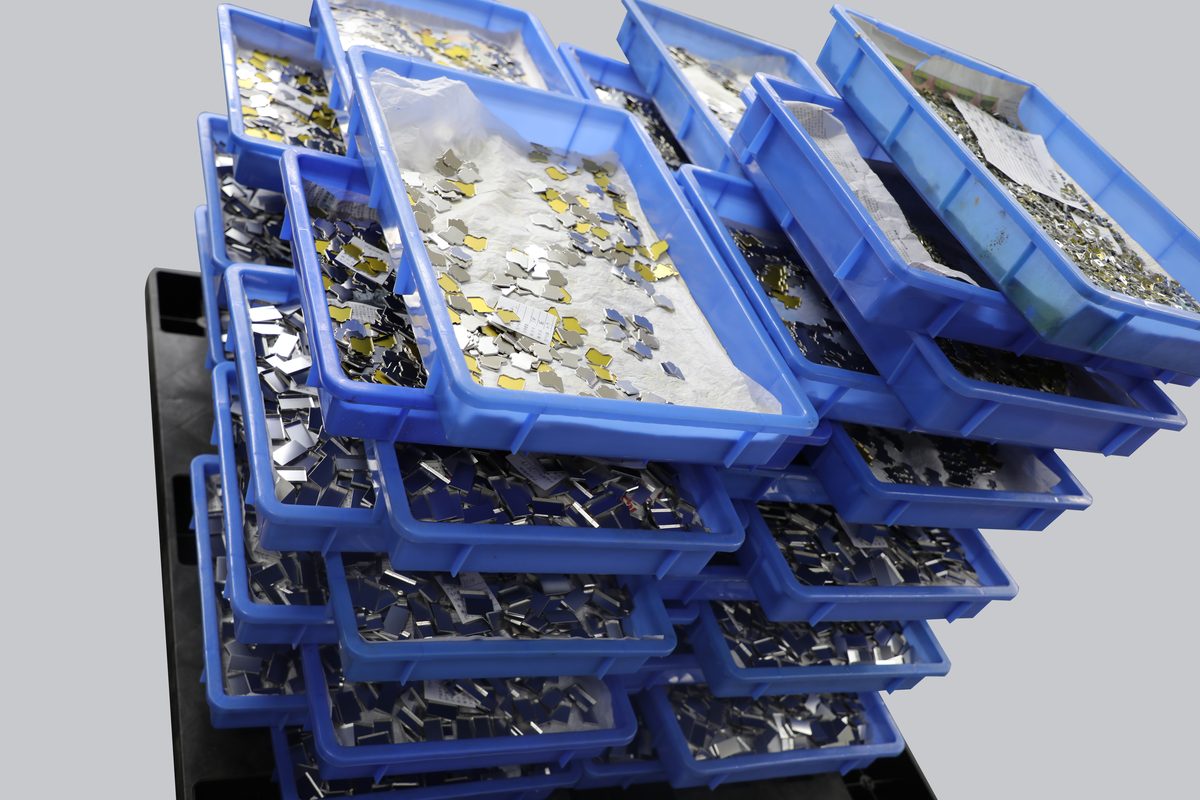
Shielding cans isolate electromagnetic energy inside devices from the external environment. Typical shielding performance requirements are 50-80 dB, depending on the application frequency band and device type.
ADAS Radar Shielding Design
Millimeter wave radar (76-81 GHz) and mid-range radar (24 GHz) in Advanced Driver Assistance Systems (ADAS) have special EMI shielding requirements:
Millimeter Wave Radar Shielding Characteristics
- Frequency-Sensitive: Narrow 76-81 GHz band, any scattering severely impacts radar performance
- Extremely Low Receiver Sensitivity: Below -80 dBm, requiring extremely high shielding integrity
- Antenna Integration Challenge: Dense MIMO radar antenna arrays pose high risk of adjacent chip interference
- Thermal Pressure: Millimeter wave front-end chip consumes 2-3W, requiring thermal vents while maintaining shielding
Key design parameters:
- Shielding Can Size: Approximately 50×50×20 mm (complete radar module)
- Shielding Performance: > 70 dB @ 77 GHz
- Solder Seam Gap: < 0.3mm (stricter than 5G consumer electronics)
- Thermal Design: Multiple φ0.8mm hole array + thermal pad
Power System Shielding for New Energy Vehicles
Electric vehicles (EV) and hybrid electric vehicles (HEV) BMS (Battery Management System) and PCS (Power Conversion System) are major EMI sources:
BMS Shielding Requirements
- Operating Environment: High voltage DC (200-600V), large current (200-400A), high frequency switching (16-20 kHz)
- Critical Circuits: Sampling, detection, and communication modules require independent shielding
- Shielding Performance Target: 50-70 dB at 150 kHz – 30 MHz frequency band
- Temperature Rating: Meet vehicle environmental requirements, -40°C to +105°C
PCS (DC-AC Inverter) Shielding
- Switching frequency harmonics are particularly strong, requiring multi-layer shielding
- Entire power module requires large shielding can (100×150×60 mm)
- Faraday cage principle design with solder area requirement >98%
- Interior requires conductive foam or conductive cloth for multiple absorption and attenuation
ECU and T-Box Shielding Solutions
ECU (Electronic Control Unit) and T-Box (Remote Communication Module) are the vehicle’s “brain” and “communication center,” with extremely stringent shielding requirements.
ECU Shielding Design
- Multi-function integration (engine control, transmission control, etc.) requires multi-cavity shielding
- Each cavity independently grounded with RF isolation partition > 80 dB between cavities
- High-speed communication interfaces (CAN, LIN, FlexRay) require independent shielding enclosure
T-Box Shielding (5G/4G Communication Module)
- Mixed Frequency Bands: Simultaneously supporting 4G LTE, 5G, WiFi, and Bluetooth
- Interference Challenge: Transmission power (23 dBm) to receiver sensitivity (-140 dBm) span 163 dB
- Isolation Requirement: > 100 dB isolation between transmit and receive antennas
- Shielding Solution: Typically 2-3 layer compartment design with TDD (Time Division Duplex) mode management
Material Selection for Automotive Applications
Vehicles operate in harsh environments, requiring material selection that differs from consumer electronics:
- Copper-Nickel Alloy (CuNi12Zn24): First choice, strong corrosion resistance, good weldability, stable shielding performance. Recommended for ADAS and ECU.
- Stainless Steel (SUS304/316): High temperature tolerance (up to 250°C), salt spray corrosion resistance, ideal for under-hood applications. Disadvantage: difficult to weld.
- Tinplate + Special Coating: Low cost, but prone to corrosion at high temperature and in salt spray environments, requiring additional protective coating.
- Aluminum Alloy: Lightweight, but lower conductivity and prone to electrochemical corrosion when in contact with copper.
Recommended Approach: Stainless steel for under-hood applications, copper-nickel for interior, with all surfaces subjected to 15°C salt spray certification.
IATF 16949 Quality System Requirements
Automotive supply chains must meet IATF 16949 quality management system with strict requirements for shielding can production, inspection, and traceability:
- Process Control: FMEA (Failure Mode Analysis), PFMEA (Process Failure Mode Analysis)
- Key Parameter Management: SPC statistics for shielding performance, solder seam gaps, and grounding impedance
- Inspection Requirements: 100% appearance inspection, sampling shielding performance, solder strength pull testing
- Traceability: Each product requires permanent batch number, production date, and test result records
- Emergency Management: Problem part recall capability, PPAP (Production Part Approval Process)
Ruishuo Metal holds IATF 16949 certification with 15+ years of automotive shielding can production experience.