5G Frequencies and EMI Challenges
5G communications span three main frequency ranges: Sub-6 GHz, millimeter wave (mm-Wave), and mid-band. Different frequency bands present vastly different EMI challenges:
- Sub-6 GHz (FR1): 0.6-7 GHz, similar shielding requirements to 4G, but with more complex interference sources
- Millimeter Wave (FR2): 24-100+ GHz, extremely short wavelengths (1-12.5mm), requiring more refined shielding design
- Mid-Band (C-band): 7-24 GHz, transitional band with unique shielding challenges
Key characteristics of millimeter wave frequency bands include:
- Extremely high frequency leads to rapid signal attenuation, received signal power is very low (around -150 dBm)
- Path loss increases with frequency squared, shielding seams become critical
- Dense antenna arrays increase risk of adjacent circuit interference
- Heat dissipation requirements far exceed 4G, requiring coordinated thermal and shielding design
Unique Requirements for Millimeter Wave Shielding
Millimeter wave shielding requires completely different design approach than Sub-6 GHz:
| Parameter | Sub-6 GHz | Millimeter Wave (FR2) |
|---|---|---|
| Shielding Performance Target | 40-60 dB | 60-80 dB |
| Frequency Error Tolerance | ±10 MHz | ±5 MHz |
| Aperture Spacing | <λ/10 (minimum 3mm) | <λ/20 (minimum 0.5mm) |
| Solder Quality | Moderate requirements | Extremely stringent (no cold joints, no gaps) |
| Conductive Coating | Optional | Required on inner surface |
Antenna Proximity Shielding Design
In 5G phones, antenna units are extremely close to other RF chips (WiFi, Bluetooth), making shielding design critical:
- Antenna Isolation: Adjacent antennas need independent shielded compartments to prevent mutual coupling
- Shielding Window Design: Provide necessary radiation space for antennas while minimizing leakage
- Scattering Polarization Design: Use special textures on inner surfaces of shielding cans to reduce reflections and standing waves
- Grounding Design: Shielding can must contact PCB ground at multiple points for low-impedance path
Typical millimeter wave antenna shielding includes:
- FR2 antenna units use independent shielding cans (typically 4×8mm to 10×15mm)
- Shielding can inner dimension precision requirement ±0.15mm, higher than Sub-6 design
- Solder seam gaps cannot exceed 0.2mm, typically using copper pillar soldering technology
Thermal Management and Shielding Coordinated Design
5G chips (RF front-end, intermediate frequency circuits) consume 2-5W, and shielding cans create thermal enclosures. Thermal vent hole design must balance with shielding performance:
- Thermal Vent Hole Design: Hole diameter <λ/10, effectively shielding while allowing heat flow
- Thermal Pad Material: Use high thermal conductivity conductive silicone pads (2~5 W/m·K), ensuring shielding continuity
- Multi-Layer Thermal Structure: Shielding can → thermal pad → heat dissipation copper foil → PCB back-side thermal management
- Thermal Evaluation: Use thermal simulation tools (such as ANSYS) to verify temperature inside shielding can does not exceed 85°C
Common thermal management solutions include thermally conductive adhesive filling, copper pillar support, and PCB back-side openings.
Material Selection for 5G Shielding
Different materials show dramatically different performance at millimeter wave frequencies:
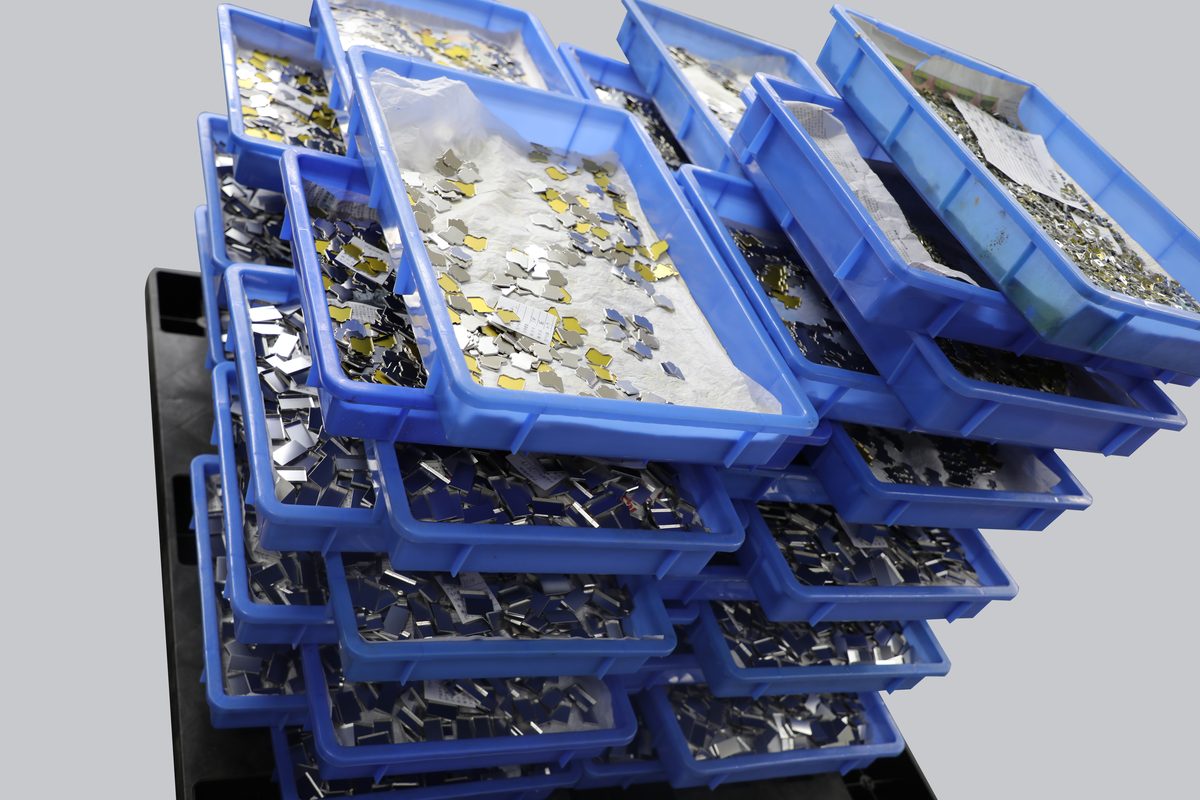
- Copper-Nickel Alloy (Nickel Silver): High conductivity, excellent corrosion resistance, good weldability, preferred choice for 5G. Shielding performance 70-80 dB.
- Tinplate (SPTE): Low cost, but shielding performance at millimeter wave decreases faster with frequency, typically for Sub-6 applications.
- Stainless Steel: Excellent corrosion resistance but difficult to weld, lower conductivity, limited millimeter wave applications.
- Copper Alloy: Optimal shielding performance but high cost, only used in critical applications.
Recommended solution: Copper-nickel alloy frame + specialized conductive coating on inner surface, achieving 75 dB shielding performance @ 28 GHz.
Design Case Studies
Case 1: 5G Millimeter Wave Antenna Shielding Module
Application Scenario: Millimeter wave antenna unit in a flagship smartphone
- Frequency Range: 24-28 GHz
- Shielding Can Dimensions: 12×8×5 mm
- Material: Copper-Nickel Alloy (CuNi12Zn24)
- Shielding Performance Target: > 75 dB @ 28 GHz
- Heat Dissipation: 500 mW
Design Strategy: Dual-piece structure with copper pillar soldering, solder area >95%. Inner surface nickel-plated with reliable thermal pad design. Shield windows use checkerboard hole array (hole diameter 0.5mm, spacing 1.2mm) to ensure shielding while allowing heat dissipation.
Case 2: WiFi 6E + 5G Co-Existence Shielding Solution
Shielding challenges when integrating WiFi 6E (6 GHz) and 5G Sub-6 (3.5 GHz) on the same PCB
- Frequency Isolation: Requires independent shielded compartments with >3mm separation partition
- Shielding Performance: WiFi compartment 65 dB, 5G compartment 60 dB
- Mutual Isolation: > 85 dB
Solution: Multi-cavity shielding can with internal partition, each cavity independently grounded. Single-piece deep-drawn structure ensures complete solder integrity.
Future Trends
- Higher Frequency Shielding: Sub-THz (100-300 GHz) applications coming soon, requiring more refined shielding design
- Conductive Coating Evolution: Transitioning from electroplating to electrochemical or chemical deposition, reducing toxic substances
- New Thermal Materials: Integrated shielding and thermal management solutions
- AI-Assisted Design: Leveraging machine learning to optimize shielding can geometry and welding strategy