Global EMC Standards Matrix
| Region | Standard | Applicability | Limit Level |
|---|---|---|---|
| North America | FCC Part 15 | Digital Equipment (Class A/B) | Class B Most Stringent |
| European Union | CE (EN 55011 etc.) | Industrial Equipment, Consumer Electronics | Group 1 (Most Stringent) – Group 2 |
| Military | MIL-STD-461G | Military Equipment | Most Stringent, Full Spectrum Coverage |
| Japan | VCCI | Information Technology Equipment | Class 1/2 (Similar to FCC) |
| China | CCC/CQC | Specific Product Categories | Based on International Standards |
| Automotive | CISPR 25 | Automotive Electronics | Class 3/5 (Class 3 Most Stringent) |
FCC Part 15 (North American Standard)
The US Federal Communications Commission (FCC) Part 15 is the most common standard for consumer electronics, divided into two main categories:
Class A vs Class B
- Class A: Industrial, commercial and utility equipment with relatively relaxed limits (e.g., 89 dBµV @ 1 MHz)
- Class B: Personal computers and peripherals with the most stringent limits (e.g., 50-66 dBµV at different frequency bands)
The vast majority of consumer electronics (smartphones, WiFi, tablets, etc.) must comply with Class B, which requires superior shielding performance.
FCC Part 15 Frequency Bands and Limits
| Frequency Band | Class A Limit | Class B Limit | Test Distance |
|---|---|---|---|
| 150 kHz – 505 kHz | 89 dBµV | 66 dBµV | 3m |
| 505 kHz – 1.705 MHz | 89 dBµV | 66 dBµV | 3m |
| 1.705 – 30 MHz | 89 dBµV | 50 dBµV | 3m / 10m |
| 30 – 1000 MHz | 90 dBµV/m | 50 dBµV/m | 3m / 10m |
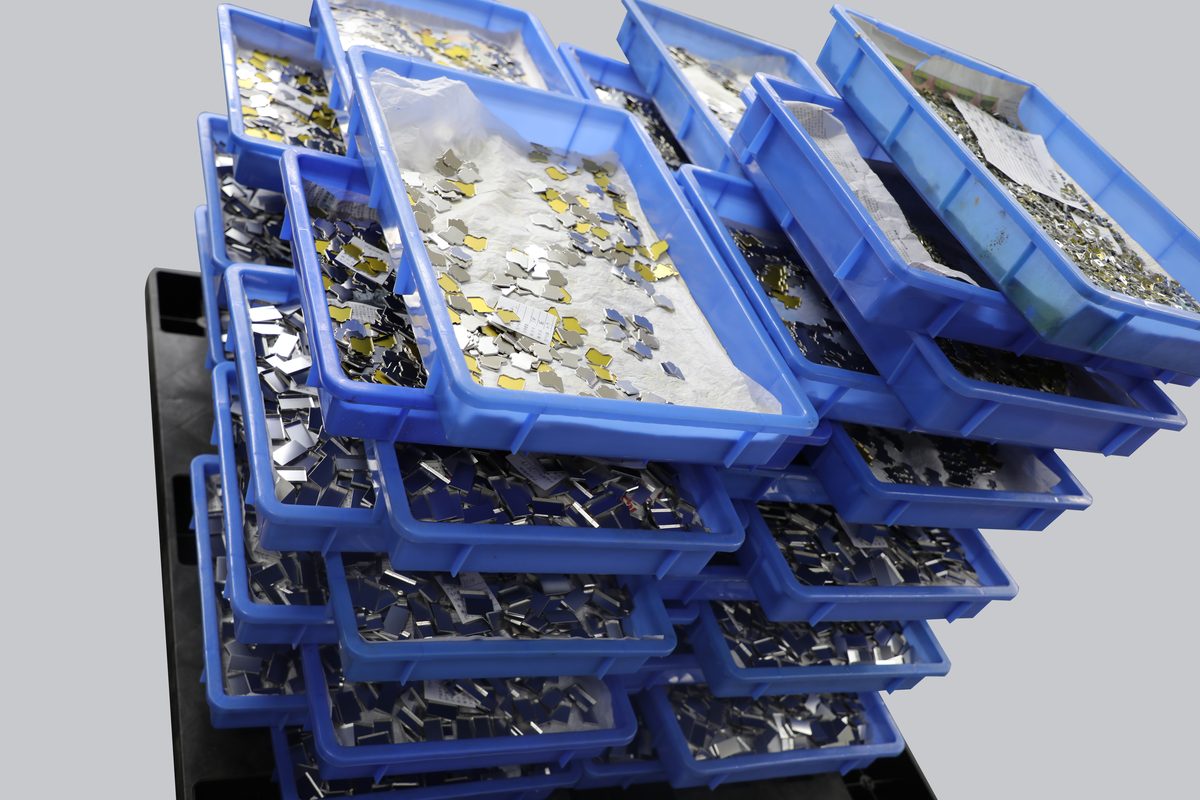
Role of Shielding Cans: By isolating high-frequency noise sources (such as RF front-end chips and switching power supplies), shielding cans can reduce radiation by 30-60 dB, helping your products easily pass Class B certification.
CE Mark and EMC Directive
The CE mark in the EU indicates that a product complies with EU safety, environmental, and EMC requirements. The EMC Directive (2014/30/EU) is fundamental.
Applicable European Union Standards
- EN 55011: Radiofrequency disturbance characteristics of industrial, scientific, medical devices, divided into Group 1 and Group 2
- EN 55013: Broadcast receivers and related equipment
- EN 55015: Limits on radio and television receiver interference
- EN 61000-4 Series: Immunity (anti-interference capability) test standards
Group 1 vs Group 2 (EN 55011)
- Group 1: Equipment intended for industrial users with intentional generation and/or use of radiofrequency energy. Most stringent limits.
- Group 2: All other equipment. Relatively relaxed limits, but still more stringent than FCC Class A.
Most consumer electronics fall into Group 2, but products with RF front-ends (5G, WiFi) often need to be designed to Group 1 standards.
MIL-STD-461G (Military Standard)
The US Department of Defense’s MIL-STD-461 is the EMC standard for military/aerospace equipment, with extremely stringent requirements covering 10 kHz – 40 GHz.
Core Test Items
- CE (Conducted Emissions): EMI limits on device power lines, 10 kHz – 10 MHz, limits 40-60 dBµV
- RE (Radiated Emissions): Spatial radiation, 10 kHz – 40 GHz, limits 30-110 dBµV/m (frequency dependent)
- CS (Conducted Susceptibility): Anti-interference capability, RF interference injection into power lines
- RS (Radiated Susceptibility): Capability to withstand spatial radiation interference
Necessity of Shielding Cans: MIL-STD limits are 10-20 times stricter than FCC, making it impossible to achieve compliance with PCB layout and filtering alone. Multi-layer shielding cans and careful grounding design are essential.
Automotive Electronics Standards (CISPR 25 & ISO 11452)
See the previous “Automotive Electronics EMI Shielding Guide” for detailed content. Brief review:
- CISPR 25:2022: In-vehicle electromagnetic disturbance limits, latest version released in 2022
- ISO 11452 Series: Anti-interference standards for vehicle-mounted equipment (RF, ESD, EFT, etc.)
- Characteristics: Limits 5-10 times more stringent than consumer electronics, requiring 60-80 dB high-frequency shielding performance
RoHS and REACH Environmental Compliance
RoHS Directive (Restriction of Hazardous Substances)
RoHS 2.0 (2011/65/EU) restricts hazardous substances in electronic products:
- Lead (Pb): < 0.1%
- Cadmium (Cd): < 0.01%
- Mercury (Hg): < 0.1%
- Hexavalent Chromium (Cr VI): < 0.1%
- Polybrominated Biphenyls (PBB) and Polybrominated Diphenyl Ethers (PBDE): < 0.1%
RoHS Compliance for Shielding Cans:
- Traditional lead-tin solder joints must be changed to lead-free solder joints (SAC305)
- Nickel plating and electroplating processes must comply with RoHS, avoiding hexavalent chromium passivation
- All Ruishuo Metal shielding cans are RoHS certified
REACH Directive (Registration, Evaluation, Authorization of Chemicals)
REACH (EC 1907/2006) requires manufacturers to register and assess the safety of chemical substances. Impact on shielding cans includes:
- Hazardous substances in solder and coatings must be on the authorization list or exempt
- Suppliers (coating factories, solder companies) must provide REACH compliance documentation
- Lead, cadmium and other SVHCs (Substances of Very High Concern) must be controlled or reported
Testing and Certification Process
Typical EMC Certification Process
- Design Phase: Design review, EMC simulation, pre-testing
- Prototype Preparation: Manufacture 3-5 prototypes, conduct internal pre-testing
- Submission for Testing: Submit to certification bodies (such as TÜV, DEKRA)
- Standard Testing: Radiated emissions, conducted disturbance, immunity testing (typically 2-4 weeks)
- Modifications (if needed): If non-compliant, implement design improvements based on report, resubmit for testing
- Certificate Issuance: Upon passing, receive certification certificate (typically valid 3-5 years)
How Shielding Cans Help with Certification
- Quick Pass-Through: Shielding cans reduce noise by 30-60 dB, significantly reducing over-limit risks
- Cost Savings: Reduces design iterations and multiple testing submissions
- Performance Margin: Sufficient shielding performance margin accommodates production variations and aging
How Shielding Cans Help Pass EMC Certification
- Isolate Noise Sources: Separate high-frequency noise sources (switching power supplies, RF front-ends, digital chips) from sensitive circuits
- Faraday Cage Principle: Physical shielding, simple and reliable principle
- Grounding Design: Optimize shielding can grounding points and paths to effectively conduct noise to ground plane
- Frequency Domain Control: Optimize for specific frequency bands (e.g., FCC Class B’s 30 MHz – 1 GHz)