How EMI Shielding Covers and Conformal Coatings Work
EMI Shielding Cover (Board Level Shield / Faraday Cage)
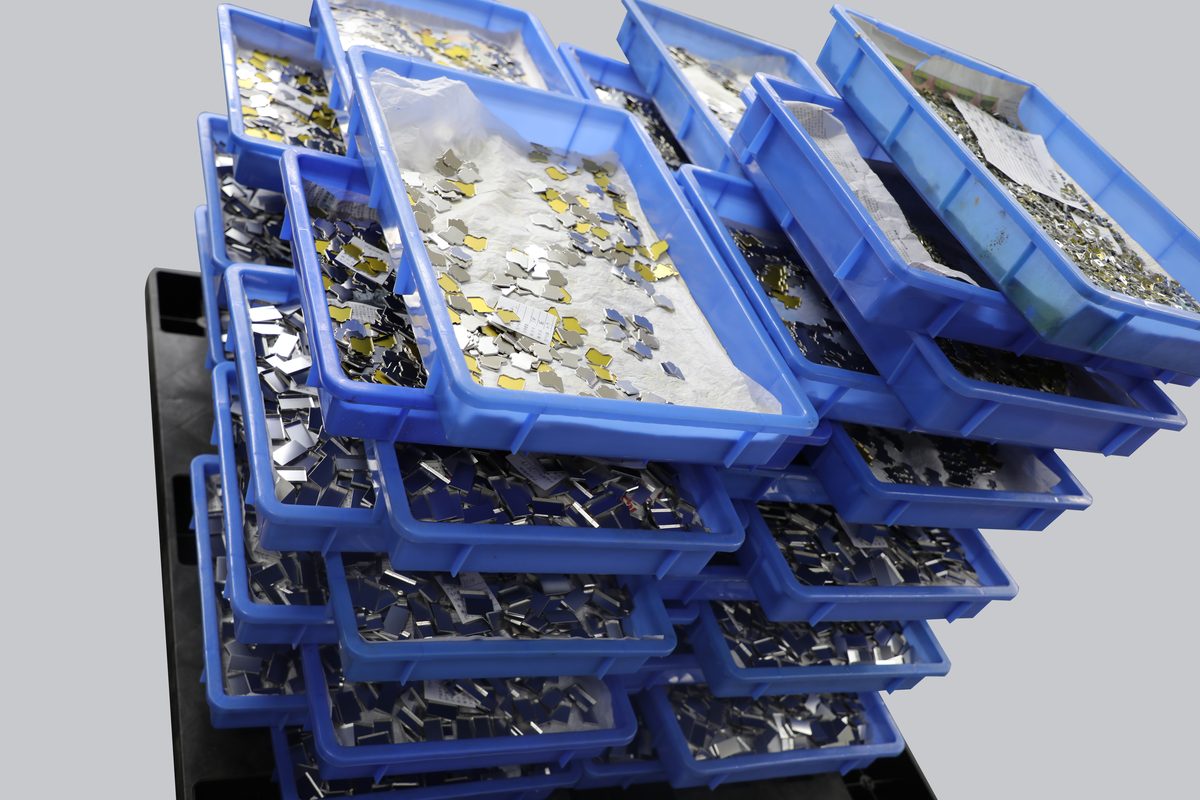
A shielding cover is a metal container that uses the complete Faraday cage principle to physically isolate noise sources from sensitive circuits through physical isolation. Typical shielding covers include:
- One-piece or two-piece metal can (tin-plated, nickel silver, stainless steel, etc.)
- Fixed to PCB via soldering or latching methods
- Internal surfaces can optionally have electroplating or conductive coating to enhance shielding
Conformal EMI Coating
Conformal coating is a chemical solution applied to PCB surfaces or critical circuit areas, using absorption and electromagnetic wave attenuation to achieve shielding:
- Conductive polymer coating (e.g., PEDOT:PSS) or graphite coating
- Typical thickness 50-300 µm
- Closely conforming to PCB, suitable for complex layouts
Shielding Performance Comparison
| Frequency Band | Shielding Cover (dB) | Conformal Coating (dB) | Remarks |
|---|---|---|---|
| 150 kHz – 1 MHz | 40 – 60 | 20 – 35 | Shielding cover advantage clear |
| 1 – 30 MHz | 50 – 75 | 25 – 45 | Shielding cover difference 15-30 dB |
| 30 – 300 MHz | 60 – 85 | 30 – 55 | Gap continues to widen |
| > 1 GHz (Millimeter-Wave) | 70 – 95 | Not Applicable | Coating performance rapidly degrades |
Conclusion: Shielding covers outperform conformal coating across all frequency bands, especially at high frequencies. For 5G, WiFi and other high-frequency applications, shielding covers are essential.
Cost Analysis
Shielding Cover Cost
Small Batch (1,000-5,000 units)
- Material cost: RMB 0.5 – 2 per unit
- Tooling: RMB 30,000-100,000 (one-time)
- Processing cost: RMB 2-5 per unit
- Per-Unit Cost: RMB 2.5-7
Large Batch (50,000+ units)
- Per-unit cost drops to: RMB 1-3
- Tooling amortized very low
Conformal Coating Cost
Coating Process
- Coating material cost: RMB 0.1-0.3 per m²
- Process cost (spraying): RMB 1-2 per unit
- Curing equipment: Reusable
- Per-Unit Cost: RMB 1-3
Advantages
- No tooling cost
- High flexibility
- Economical for small batches
Cost Conclusion: Conformal coating is cheaper for small batches (<10,000 units); shielding covers are more cost-competitive for large batches.
Reworkability Comparison
Shielding Cover Rework Advantages
- Easy to Remove: Two-piece latch design, no soldering iron needed
- Easy to Identify: Physical structure is clear, facilitates fault location
- Reusable: Good covers can be recovered and reused
- Efficient Rework: Rework time 5-10 minutes
- High Success Rate: > 95%
Conformal Coating Rework Issues
- Difficult to Remove: Chemical cleaning may damage PCB and components
- Difficult to Repair: Hidden defects under coating are hard to service
- Complex Reapplication: Requires precise thickness and conductivity control
- High Failure Rate: Can reach 20-30%
- High Rework Cost: May require PCB replacement
Design Flexibility Comparison
| Dimension | Shielding Cover | Conformal Coating |
|---|---|---|
| Complex Geometry | Limited by stamping tooling capability | Can coat any shape |
| Multi-Cavity Isolation | Can design partitions for >80 dB isolation | Difficult to achieve effective isolation |
| Vent Design | Requires precise calculation of hole diameter and spacing | Can flexibly design thickness and coverage |
| Thermal Design | Can design heat dissipation hole arrays or thermal pads | Coating itself is not thermally conductive, requires separate handling |
| Prototype Iteration | New tooling cycle long (4-6 weeks) | Rapid iteration (days) |
When to Choose Shielding Covers or Conformal Coating
Choose Shielding Covers For:
- High-Frequency Applications: 5G, WiFi 6E, Millimeter-Wave
- Strict EMC Standards: CISPR 25 (automotive), MIL-STD
- High-Volume Production: > 10,000 units/month
- High Shielding Requirements: > 70 dB
- Rework Support: Consumer electronics requiring quick repair
- Multi-Cavity Isolation: WiFi + 5G coexistence
Choose Conformal Coating For:
- Low-Frequency Applications: 150 kHz – 30 MHz
- Relaxed EMC Standards: FCC Part 15B class
- Small Batch or Prototype: < 5,000 units
- Rapid Prototyping: Quick design validation needed
- Complex PCB Layout: Irregular shapes, high integration
- Cost Priority: No tooling investment
Hybrid Approach: Best of Both Worlds
Many products use a hybrid approach, maximizing the strengths of both methods:
Typical Hybrid Design
- RF Frontend + Shielding Cover: Critical RF chips (5G, WiFi) isolated in shielding cans
- Low-Frequency Circuits + Conformal Coating: Power management, analog circuits covered with coating
- Can Interior Coating Enhancement: Conductive coating on can interior surfaces, shielding +5-10 dB
Cost Optimization Case Study
A Consumer 4G Module:
- RF chip using 30×30mm shielding can (cost RMB 5)
- Power management with conformal coating (cost RMB 1)
- Total shielding cost: RMB 6, per-unit cost reduced 20%
- Shielding performance: Still meets CISPR 22 Class B
Key Selection Guide
Quick Decision Tree:
- Frequency > 1 GHz? → Must use Shielding Cover
- Strict EMC standards (CISPR 25/MIL-STD)? → Shielding Cover
- Quick rework required? → Shielding Cover
- High PCB integration, no tooling budget? → Conformal Coating
- Need cost optimization? → Hybrid Approach